ESR Technology / HOIS / Publications / HOIS Highlights 2025-2026 / Project Progress / Other HOIS Projects
ESR Technology / HOIS / Publications / HOIS Highlights 2025-2026 / Project Progress / Other HOIS Projects
The IKB contains extensive general information about NDT techniques, applications, vendors and standards.
The main activities have been the update of the description of techniques based on their last modified date. Some techniques that have been updated are radiography, penetrant inspection, microwaves, impact testing, tandem, self-tandem, AC potential drop and endoscopy.
The aim of this strategic project is to disseminate information on Net Zero related inspection challenges to HOIS members.
There is an active forum and seminar activity within the HOIS community focussing on discussion and knowledge sharing of integrity and inspection aspects relating to low carbon and emissions reduction strategies within the energy sector. Some areas of particular interest to HOIS members are the developing hydrogen sector, carbon capture, utilisation and storage (CCUS), wind and nuclear. There is a “watching brief” activity to identify ideas for suitable HOIS projects on these topics.
The focus of the seminar this year was on flare stacks and flare gas recovery. Flare systems are essential SECE components to provide safe and reliable disposal of fluids. With national targets to reduce routine flaring and venting, more offshore platforms and FPSOs are being retrofitted with flare gas recovery systems. This results in intermittent use of equipment, including flare tips, and the ingress of oxygen via compressors into previously oxygen free systems. A seminar was held to discuss the inspection related challenges to establish the impact of cycling and different combustion regimes on the flare tips and the changing integrity threats to the associated pressure vessels and piping. The use of UAVs for visual and gas monitoring links closely to HOIS’s Guidance on Image Quality for UAV/UAS Based External Remote Visual Inspection in the Energy Industry (HOIS-G-005 Issue 2) and HOIS’s Generic Assessment Approach for Robotically Deployed Inspection (HOIS-G-098).
This strategic project has a different focus topic each year and an annual meeting is held every year.
A summary report was published on the focus topic of subsea digitalisation and wireless communication related to inspection and monitoring. Topics covered included traditional radio methods, acoustic subsea communications. optical communications, electromagnetic communications and examples of implementation
The annual seminar kicked off the focus topic for the 2025/26 HOIS year with talks and discussion on the use of NDT during different stages of the workflow to decommission offshore assets including wind turbines as well as oil and gas platforms and subsea infrastructure. A summary report has since been issued.
The focus for the 2026/27 HOIS year will be updating and improving access to the information contained in the Subsea Interactive Knowledge Base (IKB).
Human factors affect all aspects of the inspection cycle including the accuracy of inspection results. As such there has been continued interest within the HOIS membership to help identify and reduce the impact of human factors. The two discussion forums held this year focussed on:
HOIS have established the pre-eminent forum to discuss cutting-edge advances in all aspects of the digitalisation of the NDT workflow from file syntax to new tech.
Aiming to raise awareness we host a webinar every couple of months which is open to all, both HOIS members and non-members.
You can learn more about upcoming events on our website and by following us on LinkedIn or by getting in touch directly to get on our mailing list and never miss an event!
There has been active engagement with digitalisation stakeholders, cross industry and worldwide with organisations beyond the HOIS membership.
Previous forums include speakers such as, Shell, Eddyfi Technologies, Quasset, Strathclyde University, GDi, IZFP Saarbrücken, IMRANDD, Cenosco, DNV, Diondo, Trueflaw, IRISNDT, Rosen Group, Sentin AI, Vrana GmbH, Inspiring Next.
We are always on the lookout for new speakers!
Many of the webinars are now available on the HOIS YouTube channel.
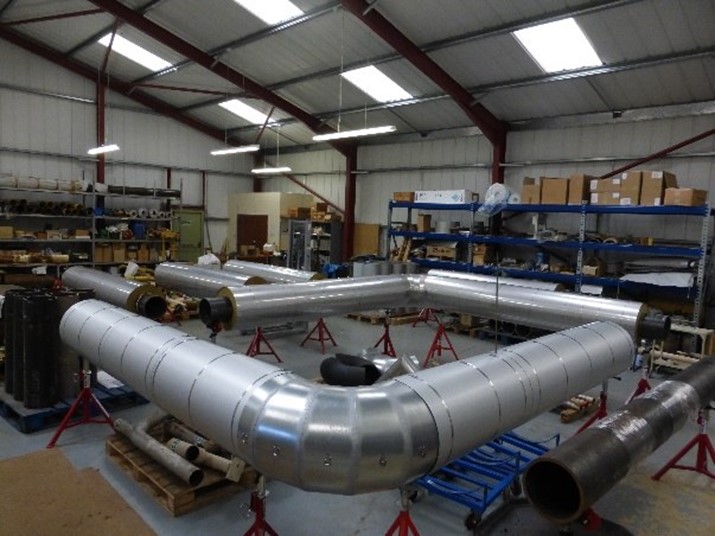
The HOIS trial and sample storage facility continues to play an important role by providing trial facilities for several HOIS projects.
The facility houses many ex-service components with examples of weld corrosion, flange face corrosion, external corrosion scabs, corrosion under pipe supports and corrosion inside trunnions donated by HOIS members. When ex-service samples are not available, ESR Technology designs and manufactures components containing realistic degradation.
HOIS members may also commission ESR Technology to host technique validation and inspector competence verification trials outside of HOIS, using this facility. Non-HOIS members may also access the samples, with member agreement, and payment of a small access fee to HOIS.